Showing posts with label Civil procedure. Show all posts

Wednesday, March 25, 2015

TRIAL, JUDGMENT, AND APPEAL

FDIC placard from when the deposit insurance l...
FDIC placard from when the deposit insurance limit was $40,000. (Photo credit: Wikipedia)

CIVIL PRACTICE AND REMEDIES CODE

TITLE 2. TRIAL, JUDGMENT, AND APPEAL

SUBTITLE A. GENERAL PROVISIONS

CHAPTER 6. GOVERNMENTAL EXEMPTION FROM BOND AND SECURITY REQUIREMENTS

Sec. 6.001.  STATE AND FEDERAL AGENCIES EXEMPT FROM BOND FOR COURT COSTS OR APPEAL.  (a)  A governmental entity or officer listed in Subsection (b) may not be required to file a bond for court costs incident to a suit filed by the entity or officer or for an appeal or writ of error taken out by the entity or officer and is not required to give a surety for the issuance of a bond to take out a writ of attachment, writ of sequestration, distress warrant, or writ of garnishment in a civil suit.
(b)  The following are exempt from the bond requirements:
(1)  this state;
(2)  a department of this state;
(3)  the head of a department of this state;
(4)  a county of this state;
(5)  the Federal Housing Administration;
(6)  the Federal National Mortgage Association;
(7)  the Government National Mortgage Association;
(8)  the Veterans' Administration;
(9)  the administrator of veterans affairs;
(10)  any national mortgage savings and loan insurance corporation created by an act of congress as a national relief organization that operates on a statewide basis;  and
(11)  the Federal Deposit Insurance Corporation in its capacity as receiver or in its corporate capacity.
(c)  Notwithstanding Subsection (a), a county or district attorney is not exempted from filing a bond to take out an extraordinary writ unless the commissioners court of the county approves the exemption in an action brought in behalf of the county or unless the attorney general approves the exemption in an action brought in behalf of the state.

Acts 1985, 69th Leg., ch. 959, Sec. 1, eff. Sept. 1, 1985.  Amended by Acts 1987, 70th Leg., ch. 167, Sec. 3.03(a), eff. Sept. 1, 1987.


Sec. 6.002.  CITIES EXEMPT FROM SECURITY FOR COURT COSTS.  (a)  Security for costs may not be required of an incorporated city or town of this state in an action, suit, or proceeding.
(b)  A municipality may institute and prosecute suits without giving security for cost and may appeal from judgment without giving supersedeas or cost bond.

Acts 1985, 69th Leg., ch. 959, Sec. 1, eff. Sept. 1, 1985.  Amended by Acts 1987, 70th Leg., ch. 149, Sec. 21, eff. Sept. 1, 1987;  Acts 2001, 77th Leg., ch. 625, Sec. 1, eff. Sept. 1, 2001.


Sec. 6.003.  WATER DISTRICTS EXEMPT FROM APPEAL BOND.  (a)  A governmental entity listed in Subsection (b) may not be required to give bond on an appeal or writ of error taken in a civil case that the entity is prosecuting or defending in its official capacity.
(b)  The following are exempt from the appeal bond requirements:
(1)  a water improvement district, a water control and improvement district, an irrigation district, a conservation and reclamation district, or a water control and preservation district organized under state law;
(2)  a levee improvement district organized under state law;
(3)  a drainage district organized under state law;  and
(4)  an entity created under Section 52, Article III, or Section 59, Article XVI, Texas Constitution.

Acts 1985, 69th Leg., ch. 959, Sec. 1, eff. Sept. 1, 1985.  Amended by Acts 1997, 75th Leg., ch. 1070, Sec. 46, eff. Sept. 1, 1997.


RULE OF DECISION

Legal Systems of the World Civil law Common la...
Image via Wikipedia
CIVIL PRACTICE AND REMEDIES CODE

TITLE 2. TRIAL, JUDGMENT, AND APPEAL

SUBTITLE A. GENERAL PROVISIONS

CHAPTER 5. RULE OF DECISION

Sec. 5.001.  RULE OF DECISION.  The rule of decision in this state consists of those portions of the common law of England that are not inconsistent with the constitution or the laws of this state, the constitution of this state, and the laws of this state.

Acts 1985, 69th Leg., ch. 959, Sec. 1, eff. Sept. 1, 1985.


Monday, March 16, 2015

SANCTIONS FOR FRIVOLOUS PLEADINGS AND MOTIONS

WASHINGTON - AUGUST 18:  Dick Heller, plaintif...Image by Getty Images via @daylife
CIVIL PRACTICE AND REMEDIES CODE

TITLE 2. TRIAL, JUDGMENT, AND APPEAL

SUBTITLE A. GENERAL PROVISIONS

CHAPTER 10. SANCTIONS FOR FRIVOLOUS PLEADINGS AND MOTIONS

Sec. 10.001.  SIGNING OF PLEADINGS AND MOTIONS.  The signing of a pleading or motion as required by the Texas Rules of Civil Procedure constitutes a certificate by the signatory that to the signatory's best knowledge, information, and belief, formed after reasonable inquiry:
(1)  the pleading or motion is not being presented for any improper purpose, including to harass or to cause unnecessary delay or needless increase in the cost of litigation;
(2)  each claim, defense, or other legal contention in the pleading or motion is warranted by existing law or by a nonfrivolous argument for the extension, modification, or reversal of existing law or the establishment of new law;
(3)  each allegation or other factual contention in the pleading or motion has evidentiary support or, for a specifically identified allegation or factual contention, is likely to have evidentiary support after a reasonable opportunity for further investigation or discovery;  and
(4)  each denial in the pleading or motion of a factual contention is warranted on the evidence or, for a specifically identified denial, is reasonably based on a lack of information or belief.

Added by Acts 1995, 74th Leg., ch. 137, Sec. 1, eff. Sept. 1, 1995.


Sec. 10.002.  MOTION FOR SANCTIONS.  (a)  A party may make a motion for sanctions, describing the specific conduct violating Section 10.001.
(b)  The court on its own initiative may enter an order describing the specific conduct that appears to violate Section 10.001 and direct the alleged violator to show cause why the conduct has not violated that section.
(c)  The court may award to a party prevailing on a motion under this section the reasonable expenses and attorney's fees incurred in presenting or opposing the motion, and if no due diligence is shown the court may award to the prevailing party all costs for inconvenience, harassment, and out-of-pocket expenses incurred or caused by the subject litigation.

Added by Acts 1995, 74th Leg., ch. 137, Sec. 1, eff. Sept. 1, 1995.


Sec. 10.003.  NOTICE AND OPPORTUNITY TO RESPOND.  The court shall provide a party who is the subject of a motion for sanctions under Section 10.002 notice of the allegations and a reasonable opportunity to respond to the allegations.

Added by Acts 1995, 74th Leg., ch. 137, Sec. 1, eff. Sept. 1, 1995.


Sec. 10.004.  VIOLATION;  SANCTION.  (a)  A court that determines that a person has signed a pleading or motion in violation of Section 10.001 may impose a sanction on the person, a party represented by the person, or both.
(b)  The sanction must be limited to what is sufficient to deter repetition of the conduct or comparable conduct by others similarly situated.
(c)  A sanction may include any of the following:
(1)  a directive to the violator to perform, or refrain from performing, an act;
(2)  an order to pay a penalty into court;  and
(3)  an order to pay to the other party the amount of the reasonable expenses incurred by the other party because of the filing of the pleading or motion, including reasonable attorney's fees.
(d)  The court may not award monetary sanctions against a represented party for a violation of Section 10.001(2).
(e)  The court may not award monetary sanctions on its own initiative unless the court issues its order to show cause before a voluntary dismissal or settlement of the claims made by or against the party or the party's attorney who is to be sanctioned.
(f)  The filing of a general denial under Rule 92, Texas Rules of Civil Procedure, shall not be deemed a violation of this chapter.

Added by Acts 1995, 74th Leg., ch. 137, Sec. 1, eff. Sept. 1, 1995.


Sec. 10.005.  ORDER.  A court shall describe in an order imposing a sanction under this chapter the conduct the court has determined violated Section 10.001 and explain the basis for the sanction imposed.

Added by Acts 1995, 74th Leg., ch. 137, Sec. 1, eff. Sept. 1, 1995.


Sec. 10.006.  CONFLICT.  Notwithstanding Section 22.004, Government Code, the supreme court may not amend or adopt rules in conflict with this chapter.

Added by Acts 1995, 74th Leg., ch. 137, Sec. 1, eff. Sept. 1, 1995.


AFFIDAVIT OF INABILITY TO PAY COSTS

ARLINGTON, VA - MAY 19: In this handout image ...Image by Getty Images via @daylife
CIVIL PRACTICE AND REMEDIES CODE

TITLE 2. TRIAL, JUDGMENT, AND APPEAL

SUBTITLE A. GENERAL PROVISIONS

CHAPTER 13. AFFIDAVIT OF INABILITY TO PAY COSTS

Sec. 13.001.  DISMISSAL OF ACTION.  (a)  A court in which an affidavit of inability to pay under Rule 145, Texas Rules of Civil Procedure, has been filed may dismiss the action on a finding that:
(1)  the allegation of poverty in the affidavit is false;  or
(2)  the action is frivolous or malicious.
(b)  In determining whether an action is frivolous or malicious, the court may consider whether:
(1)  the action's realistic chance of ultimate success is slight;
(2)  the claim has no arguable basis in law or in fact;  or
(3)  it is clear that the party cannot prove a set of facts in support of the claim.
(c)  An action may be dismissed under Subsection (a) as frivolous or malicious either before or after service of process.

Added by Acts 1987, 70th Leg., ch. 976, Sec. 1, eff. June 19, 1987.


Sec. 13.002.  JUDGMENT.  Judgment may be rendered for costs at the conclusion of the action as in other cases, but the state is not liable for any of those costs.

Added by Acts 1987, 70th Leg., ch. 976, Sec. 1, eff. June 19, 1987.


Sec. 13.003.  FREE TRANSCRIPT OF STATEMENT OF FACTS ON APPEAL.  (a)  Subject to Subsection (c), a court reporter shall provide without cost a statement of facts and a clerk of a court shall prepare a transcript for appealing a judgment from the court only if:
(1)  an affidavit of inability to pay the cost of the appeal has been filed under the Texas Rules of Appellate Procedure;  and
(2)  the trial judge finds:
(A)  the appeal is not frivolous;  and
(B)  the statement of facts and the clerk's transcript is needed to decide the issue presented by the appeal.
(b)  In determining whether an appeal is frivolous, a judge may consider whether the appellant has presented a substantial question for appellate review.
(c)  The trial judge may order a clerk of a court to prepare a transcript, or any part of the transcript, necessary for making the determination required by Subsection (a)(2).

Added by Acts 1993, 73rd Leg., ch. 861, Sec. 1, eff. Sept. 1, 1993.  Amended by Acts 1997, 75th Leg., ch. 467, Sec. 1, eff. Sept. 1, 1997.


Sec. 13.004.  INAPPLICABILITY TO CERTAIN CLAIMS.  This chapter does not apply to a claim governed by Chapter 14.

Added by Acts 1995, 74th Leg., ch. 378, Sec. 3, eff. June 8, 1995.

Monday, January 31, 2011

TRIAL, JUDGMENT, AND APPEAL

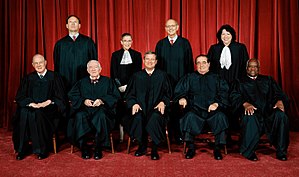
The current United States Supreme Court, the h...Image via Wikipedia
CIVIL PRACTICE AND REMEDIES CODE

TITLE 2. TRIAL, JUDGMENT, AND APPEAL

SUBTITLE A. GENERAL PROVISIONS

CHAPTER 9. FRIVOLOUS PLEADINGS AND CLAIMS

SUBCHAPTER A. GENERAL PROVISIONS

Sec. 9.001.  DEFINITIONS.  In this chapter:
(1)  "Claimant" means a party, including a plaintiff, counterclaimant, cross-claimant, third-party plaintiff, or intervenor, seeking recovery of damages.  In an action in which a party seeks recovery of damages for injury to another person, damage to the property of another person, death of another person, or other harm to another person, "claimant" includes both that other person and the party seeking recovery of damages.
(2)  "Defendant" means a party, including a counterdefendant, cross-defendant, or third-party defendant, from whom a claimant seeks relief.
(3)  "Groundless" means:
(A)  no basis in fact;  or
(B)  not warranted by existing law or a good faith argument for the extension, modification, or reversal of existing law.
(4)  "Pleading" includes a motion.

Added by Acts 1987, 70th Leg., 1st C.S., ch. 2, Sec. 2.01, eff. Sept. 2, 1987.


Sec. 9.002.  APPLICABILITY.  (a)  This chapter applies to an action in which a claimant seeks:
(1)  damages for personal injury, property damage, or death, regardless of the legal theories or statutes on the basis of which recovery is sought, including an action based on intentional conduct, negligence, strict tort liability, products liability (whether strict or otherwise), or breach of warranty;  or
(2)  damages other than for personal injury, property damage, or death resulting from any tortious conduct, regardless of the legal theories or statutes on the basis of which recovery is sought, including libel, slander, or tortious interference with a contract or other business relation.
(b)  This chapter applies to any party who is a claimant or defendant, including but not limited to:
(1)  a county;
(2)  a municipality;
(3)  a public school district;
(4)  a public junior college district;
(5)  a charitable organization;
(6)  a nonprofit organization;
(7)  a hospital district;
(8)  a hospital authority;
(9)  any other political subdivision of the state;  and
(10)  the State of Texas.
(c)  In an action to which this chapter applies, the provisions of this chapter prevail over all other law to the extent of any conflict.

Added by Acts 1987, 70th Leg., 1st C.S., ch. 2, Sec. 2.01, eff. Sept. 2, 1987.


Sec. 9.003.  TEXAS RULES OF CIVIL PROCEDURE.  This chapter does not alter the Texas Rules of Civil Procedure or the Texas Rules of Appellate Procedure.

Added by Acts 1987, 70th Leg., 1st C.S., ch. 2, Sec. 2.01, eff. Sept. 2, 1987.


Sec. 9.004.  APPLICABILITY.  This chapter does not apply to the Deceptive Trade Practices-Consumer Protection Act (Subchapter E, Chapter 17, Business & Commerce Code) or to Chapter 21, Insurance Code.

Added by Acts 1987, 70th Leg., 1st C.S., ch. 2, Sec. 2.01, eff. Sept. 2, 1987.


SUBCHAPTER B. SIGNING OF PLEADINGS

Sec. 9.011.  SIGNING OF PLEADINGS.  The signing of a pleading as required by the Texas Rules of Civil Procedure constitutes a certificate by the signatory that to the signatory's best knowledge, information, and belief, formed after reasonable inquiry, the pleading is not:
(1)  groundless and brought in bad faith;
(2)  groundless and brought for the purpose of harassment;  or
(3)  groundless and interposed for any improper purpose, such as to cause unnecessary delay or needless increase in the cost of litigation.

Added by Acts 1987, 70th Leg., 1st C.S., ch. 2, Sec. 2.01, eff. Sept. 2, 1987.


Sec. 9.012.  VIOLATION;  SANCTION.  (a)  At the trial of the action or at any hearing inquiring into the facts and law of the action, after reasonable notice to the parties, the court may on its own motion, or shall on the motion of any party to the action, determine if a pleading has been signed in violation of any one of the standards prescribed by Section 9.011.
(b)  In making its determination of whether a pleading has been signed in violation of any one of the standards prescribed by Section 9.011, the court shall take into account:
(1)  the multiplicity of parties;
(2)  the complexity of the claims and defenses;
(3)  the length of time available to the party to investigate and conduct discovery;  and
(4)  affidavits, depositions, and any other relevant matter.
(c)  If the court determines that a pleading has been signed in violation of any one of the standards prescribed by Section 9.011, the court shall, not earlier than 90 days after the date of the determination, at the trial or hearing or at a separate hearing following reasonable notice to the offending party, impose an appropriate sanction on the signatory, a represented party, or both.
(d)  The court may not order an offending party to pay the incurred expenses of a party who stands in opposition to the offending pleading if, before the 90th day after the court makes a determination under Subsection (a), the offending party withdraws the pleading or amends the pleading to the satisfaction of the court or moves for dismissal of the pleading or the offending portion of the pleading.
(e)  The sanction may include one or more of the following:
(1)  the striking of a pleading or the offending portion thereof;
(2)  the dismissal of a party;  or
(3)  an order to pay to a party who stands in opposition to the offending pleading the amount of the reasonable expenses incurred because of the filing of the pleading, including costs, reasonable attorney's fees, witness fees, fees of experts, and deposition expenses.
(f)  The court may not order an offending party to pay the incurred expenses of a party who stands in opposition to the offending pleading if the court has, with respect to the same subject matter, imposed sanctions on the party who stands in opposition to the offending pleading under the Texas Rules of Civil Procedure.
(g)  All determinations and orders pursuant to this chapter are solely for purposes of this chapter and shall not be the basis of any liability, sanction, or grievance other than as expressly provided in this chapter.
(h)  This section does not apply to any proceeding to which Section 10.004 or Rule 13, Texas Rules of Civil Procedure, applies.

Added by Acts 1987, 70th Leg., 1st C.S., ch. 2, Sec. 2.01, eff. Sept. 2, 1987.  Amended by Acts 1999, 76th Leg., ch. 1111, Sec. 1, eff. Sept. 1, 1999.


Sec. 9.013.  REPORT TO GRIEVANCE COMMITTEE.  (a)  If the court imposes a sanction against an offending party under Section 9.012, the offending party is represented by an attorney who signed the pleading in violation of any one of the standards under Section 9.011, and the court finds that the attorney has consistently engaged in activity that results in sanctions under Section 9.012, the court shall report its finding to an appropriate grievance committee as provided by the State Bar Act (Article 320a-1, Vernon's Texas Civil Statutes) or by a similar law in the jurisdiction in which the attorney resides.
(b)  The report must contain:
(1)  the name of the attorney who represented the offending party;
(2)  the finding by the court that the pleading was signed in violation of any one of the standards under Section 9.011;
(3)  a description of the sanctions imposed against the signatory and the offending party;  and
(4)  the finding that the attorney has consistently engaged in activity that results in sanctions under Section 9.012.

Added by Acts 1987, 70th Leg., 1st C.S., ch. 2, Sec. 2.01, eff. Sept. 2, 1987.


Sec. 9.014.  PLEADINGS NOT FRIVOLOUS.  (a)  A general denial does not constitute a violation of any of the standards prescribed by Section 9.011.
(b)  The amount requested for damages in a pleading does not constitute a violation of any of the standards prescribed by Section 9.011.

Added by Acts 1987, 70th Leg., 1st C.S., ch. 2, Sec. 2.01, eff. Sept. 2, 1987.


exempt from the payment of the filing fee

Poster reminding citizens of complete blackout...Image via Wikipedia
CIVIL PRACTICE AND REMEDIES CODE

TITLE 2. TRIAL, JUDGMENT, AND APPEAL

SUBTITLE A. GENERAL PROVISIONS

CHAPTER 8. STATE EXEMPTION FROM CERTAIN FEES:  FEES PAID BY OPPOSING PARTY

Sec. 8.01.  STATE EXEMPTION.  The state is exempt from the payment of the filing fee imposed by Section 51.701, Government Code.

Added by Acts 1989, 71st Leg., ch. 2, Sec. 4.01(a), eff. Aug. 28, 1989.


Sec. 8.02.  FEE PAID BY OPPOSING PARTY.  If the state prevails in a lawsuit, the opposing party shall pay the entire amount of any filing fee attributable to the state, including any amount exempted under Section 8.01.

Added by Acts 1989, 71st Leg., ch. 2, Sec. 4.01(a), eff. Aug. 28, 1989.